Showing posts with label Garden Texture. Show all posts

Sunday, December 19, 2010

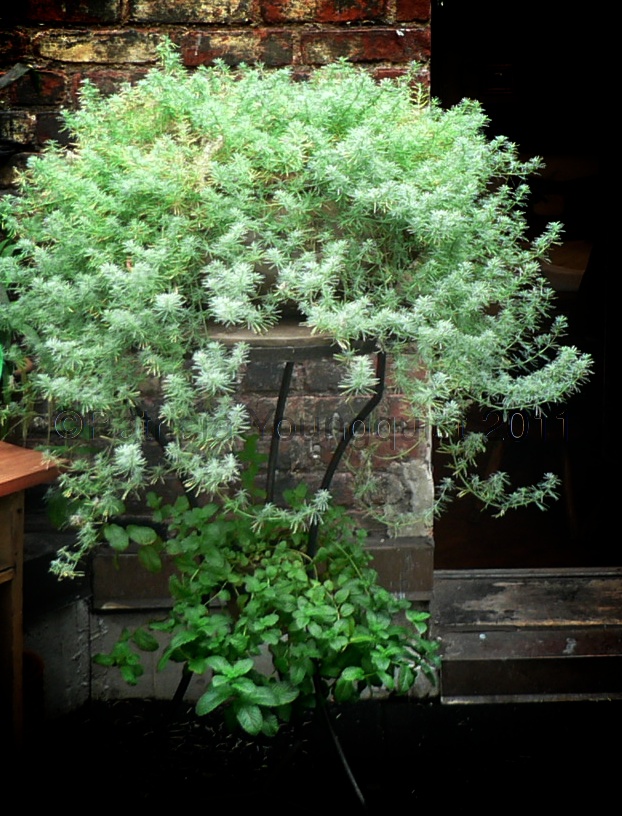
Honoring the Season of Feasts with Hakonechola Macra (Japanese Forest Grass)


Today is the Fourth Sunday of Advent, a season that began on November 28th 2010.  Dennis Bratcher writes,"the fourth candle of the advent wreath is lit on this day and the light of these candles reminds Christian believers that Jesus is the light of the world — the light that comes into the darkness of people's lives to bring newness, life and hope. It also reminds people that they are called to bring light into the world, and to reflect this grace to others. The progression in the lighting of the Advent candles symbolizes the aspects of waiting, as the candles are lit during the four week period, it also symbolizes the darkness of fear and hopelessness receding as more and more light is shed into the world." Even though I have done volunteer work by bringing Holy Communion to the homebound every Sunday, as well as special feast days, for the past five years, I confess I still struggle with having the faith Bratcher describes.

However, I do design and sell holiday cards, but I like to wait until Advent has passed before sending mine, out of reverence to the message articulated in Bratcher's writings. This year I have designed a card to commemorate Christmas by employing an aspect of botanical textures (a garden feature I wrote about in November), of one of my urban garden plants; Hakonechola Macra (Japanese Forest Grass: All Gold Variety), using a photograph (taken before my plants were snuggled in for the winter as described in a recent post).


I have rendered this image in a gradient of black and white then brushed in a twinge of color so that only two sprigs coming from the leaves have a hint of color. I have done this as a representation of light breaking into darkness, and hopefully conveying the meaning of the promise of Christmas, as described by Bratcher. I have made two versions of this card and the result can be seen in the photographs posted above  and below today's blog entry.


Please note I have not added either of these images discussed in this post to my web-site. However, you can still find a selection of cards to send to those you know who celebrate Christmas with a card that is about more than communication.


Wednesday, December 15, 2010

Home for the Holidays


As part of this year's roof-top extension urban garden winterizing, (which I blogged about in a previous post), my Fagus sylvatica (Beech Tree), 'housed' in a lovely container, was removed from where it had been placed in what had been a frame for a table. You may recall what I wrote about this in an earlier entry and if not, please click here. In any event, the reason for moving the Fagus sylvatica was that it was located at the extreme northwest corner of my rooftop extension garden and very exposed to nature's elements. With winter-like temperatures setting in, I had to protect it by having the container wrapped twice in bubble-wrap, then 'sealed' with burlap tied tightly with jute, and then butt it up against the southeast portion of my roof extension garden. All the plants alongside where the Fagus had been located were treated in the same way and moved as well, where they could all huddle together, but placed in such a way as if they were sitting in an audience and each needed a good seat to see what was happening.

(I cannot take credit for this observation as it was Juan's, but I have had similar reactions to groupings of trees, plants, and shrubs, and in fact when I was in Vermont this past October, I mentioned to friends that in the Vermont countryside the trees looked as if they were giving a standing ovation.) An image of my garden treasures huddled together in an audience style facing west as they await spring can be seen below:


However, moving my trees, plants, and shrubs left my H.F. Young Clematis on its own in the extreme northwest corner of my rooftop extension garden to bear the elements of winter, as I could not disrupt its vine growth that has climbed up the pole behind it for many years (you can see a portion of its leaves on the pole in the photograph at the top of this post). I could only have the Clematis's container wrapped in burlap and have mulch placed over the entire plant as I put it to bed for winter. Meanwhile, (as I have mentioned before), there is something very calming about putting trees, shrubs, and plants asleep for the winter, and in seeing the 'empty' space this process leaves. But since it is the holidays, a time for decoration, and because this Sunday will be the last Sunday in Advent, I did not want my H.F. Young Clematis to be alone at Christmas; so in keeping with my finding uses for my garden table, I placed a decorated wreath (that I had inside my home in honor of Advent) in the rim so that my H.F. could feel that it too was home for the holidays.

Monday, December 13, 2010

Lighting a Fire Inside the Heart . . .


"Christmas is not in tinsel and lights and outward show. The secret lies in an inner glow. It's lighting a fire inside the heart. Good will and joy a vital part. It's higher thought and a greater plan. It's glorious dream in the soul of man." (Wilfred A. Peterson) It is only December 13th, and Christmas is 12 days away, but from all the frenzy of various tree lighting celebrations (which I have blogged about in a previous post) that sets crowds clamoring in New York City where I live, it is  hard not to get caught up in the often chaotic atmosphere of the city.

I normally do not like to put up outdoor decorations to honor the season until Christmas Eve, and then leave them up for the feast days that follow. I don't want to rush my life or the season by doing things too early or to be taking time away from the present moment; and in this case that would be reflecting on the season Advent has to offer. In fact, this year I actually took down my year-round outdoor lights (that have been wrapped around my urban garden's railing for a number of years) at the very time my neighbors were putting up their annual holiday lights. I did this because when I winterized my garden by having my trees, shrubs, plants, and herbs wrapped, and also had most of them moved closer to the building (as I described in my post on winterizing), I was "left" with bare branches of my Actinida kolomikta and Actimidia (Kiwi Vines) which can be seen in the photograph at the top of this post. I continue to find the textures of this vine's branches to be awesome, as I've previously noted when describing my "lighting ceremony" which I described in this entry. At that time I decided I would be taking down my railing lights, which I have had for a number of years, as I was afraid the wires and cords would interfere with the Actinida kolomikta's branches. I had taken down the railing lights in the wee (and frigid) hours of the morning (of the day I had my containers wrapped for winterizing) by cutting all my lights from the roof extension garden's railings. My intention was to leave the railings bare to showcase the Kiwi's branches, and to wait until Christmas to put up the holiday lights, but since I wanted help stringing them, I had to do it on my winterizing day when help was available. The result can be seen in the photograph posted below, which was taken by Donna De Solis.


Donna took this photograph when I had a "re-lighting" ceremony, although on this particular evening, the ceremony was an "inner lighting ceremony" to help Donna preserve memories and the light of her friend who had passed away. I had made an i-movie for Donna from "cell-phone" footage and also with numerous photos that she had given me. The movie that she wanted me to create was in honor of her friend, and what better time to honor him than during Advent. I hope in the hustle and bustle of holiday time, that you too find time to honor your friends and family in whatever way you find meaningful, and if it is by having a gathering, hosting an event, or one-to-one communication, I still have some holiday invitations that will preserve a moment in time, event program covers that will enhance your venue, and cards that are about more than communication. These can be found on my web-site where purchase information is available.


To reiterate: "Christmas is not in tinsel and lights and outward show. The secret lies in an inner glow. It's lighting a fire inside the heart. Good will and joy a vital part. It's higher thought and a greater plan. It's glorious dream in the soul of man." (Wilfred A. Peterson)

Saturday, December 11, 2010

Today has a "Count Down Date" : 12-11-10, Finish Winterizing !

The  photograph above was taken about six weeks ago, on October the 27th 2010, in the afternoon prior to my presentation (re: my on-line brochure) at the Apple Store on 67th Street and Broadway in New York City. (I spoke about the presentation in two previous posts which can be accessed by clicking here and here). I took the photo from the roof of the building where I live, to have an aerial view of my roof-extension, urban garden. I also wanted to have a full view of my roof-extension garden to include in a "pitch" that I was requested to submit to someone who works for a well known public figure.
That person is someone whom I had happened to reach by phone, and who shall remain nameless, as I may try and reach her after the holidays about blogging for their organization. In any event, when I spoke to this person, I told them about how I have winterized my roof-extension garden over the years, and she gave me her email and said to send her a "pitch" with related photographs, which I did. I got no response, and so I followed up with a phone-message as one never knows what really happens to materials sent in an email. Sometimes a query, proposal, resume, or pitch does not make it to an in-box. There is always the fear that it will go to spam, so, it would be nice in this day and age of several ways of communicating, if recipients who are employers would acknowledge materials that they receive — even it is just to hit "REPLY" if the query is made in an email, pretty effortless don't you think? Instead of leaving those like myself who are seeking assignments to be left wondering if everything they send goes into The Black Hole, I think it is time that people who are fortunate enough to be working recall what it was like when they were seeking work and acknowledge those seeking assignments.

I won't hold my breath; I've got, as the saying goes,"other fish to fry," and a lovely garden that requires much of my attention, especially with winter approaching. I have always winterized my garden in unique ways, which is why a number of people told me to contact this particular company.

As I have been stating in this posting, six weeks have passed since I sent my "pitch" and since the photo of my garden at the top of this post was taken. Part of my hope in sending my ideas to this public figure was to earn a few dollars, but I also wanted to reach out to other gardeners —especially urban gardeners: before winter sets in. 


Since I don't anticipate I'll hear from this organization, although I've kept my contact person nameless, (because I never got a 'no' and I suppose I could still hear from her), I'll share my winterizing methods here, even though many of my readers who are urban gardeners have probably winterized by now. Nonetheless, in case you are a gardener, and haven't done this, you may be able to learn from the experiences I have had over the years. 

The following text with links to photos regarding winterizing an urban garden (it would work for suburban gardens too), is what I emailed the contact person staff of the well-known company October 27th, 2010:

"Being that it is near the end of October, it is not too soon for urban gardeners to think about how they might winter over their plants, shrubs, and herbs for the season. I have a lovely garden on the Upper West Side of Manhattan (Photo #1) that is the result of years of “proper” winterizing. My garden includes a variety of herbs, plants, and shrubs as well as an old SODA sign where I often drape holiday lights to celebrate my outdoor space (as I have done in Photo #1 with Halloween - pumpkin-shaped- lights soon to be replaced by other holiday lights since Halloween is Sunday).
Now I find myself vigilant about the five-letter word for most gardeners: f-r-o-s-t and the six letter word that will soon follow: w-i-n-t-e-r. For the past few winters, I protected my less hardy plants, shrubs and herbs from harsh elements by constructing a cold frame. I had learned my winterizing lesson the hard way, when some years ago,  I bought my special herbs and plants inside my studio apartment only to have them die from shock and the dryness of my place. The dryness is caused by steam-heat - a bane of existence to many New York City dwellers. These conditions did not make a good atmosphere in making a winter home for the less hardy things that I love to grow.
In any event, the experience of having my plants and herbs die is behind me, thanks to my having used a cold-frame. A cold frame is a transparent-roofed enclosure usually built low to the ground and used to protect plants, herbs, and small shrubs from cold weather. The transparent top of a cold frame admits sunlight and so the structure functions as a miniature greenhouse. It costs nothing to use because it relies solely on the warmth of the sun. 
Cold frames are generally found in rural home gardens, but because I live in Manhattan, I have become quite creative in making use of space. I saw no obstacle in having a cold frame constructed to use during the winter months that could be taken down and stored during spring, summer and fall. My endeavor was successful, so I am writing this pitch in order to share my “recipe”  for a cold frame so that other urban gardeners (and suburban gardens) can successfully winterize their plants, herbs and shrubs.
Normally a cold frame is constructed with old glass windows and wood, but I used plexi-glass, and 4x4s for the corner posts as well as  2x4s for the additional framing. I chose these materials so that I could  take the cold-frame apart and store it  - without fear of it breaking - in my  closet during the non-winter months. The minimum thickness needed for plexi-glass used in this manner is 1/2”.  I used five pieces (4 sides to form a  square, and one for the top that functioned as a lid). When determining the height of the sheets of plexi-glass, I had to allow for several inches of empty space above and around each plant for air circulation, so in my case my cold-frame looked like a mini-greenhouse. (Photo #2)
Usually a cold frame functions optimally when it is butted up against a home, garage, or solid fence, but with roof-extension gardens these options are usually not available. The first year I chose the part of my  roof-extension which received the most sunlight, and I recommend anyone taking on this mission find the sunniest spot on their outdoor space to place  a cold frame. Extra humidity can be provided by placing trays - that are similar to those that are used in a darkroom as developing trays for photographic prints -  filled with bark chips or mulch and put underneath the plants. 
Additionally, I also needed to make sure I allowed for the lid to be able to be left open  - at least a few inches - so that the air could circulate from time to time. (I used a  bamboo pole on days I wanted to keep the frame open.) (Photo #3). I made my plant’s winter home festive by adding lights (Photo #4  as well as Photo #5 ) and placing little window boxes of hearty plants alongside the outer edges of  it (seen in all photos #2-#5). 
My plants and herbs did well in terms of warmth that first year, but the second year I put the structure closer to the walls of my apartment to protect the plants, herbs and shrubs from wind-damage, and in addition to the lights and window boxes, I draped it in garland for the holiday season. (Photo #6 as well as Photo #7).
After two years of cold-frame living my plants were established enough to survive without a winter home; however I did mulch them very well, then wrapped every container twice in bubble-wrap and surrounded this with a strong burlap secured tightly with jute. (Photo #8). New York City got a lot of snow that season (Photo #9 as well as Photo #10) but all survived, and I expect to have my plants, herbs, and shrubs for many years to come."


Again,  it has been six weeks since I submitted my proposal, and a lot has happened in my garden in six weeks, as can be seen in the photograph posted at the end of this entry. A few days ago, December 4, 2010, Juan helped me to complete my winterizing for the 2010-2011, and all my trees, shrubs, plants, and herbs have been put to bed for a winter's nap. He wrapped them lovingly in bubble-wrap and burlap as I had done with someone else last year. I've blogged about Juan's talents in previous posts which you can go to by clicking here, here and here. The result of our 2010 winterizing can be seen in the photograph (taken by Juan from the roof of my building) below:
Compare it to the image at the top of the post to really see what happens in seven weeks in a roof-extension garden. With the current economic situation, and the lack of assignments I often feel my life is stagnant — my garden is 'proof' that this is not true. A garden is always changing, not always so drastically in such a relatively short amount of time, but it is always changing. If you look really carefully to the right of my garden, you will see branches along the railing: those are the branches from my Acinida kolomikta and Actimidia (Kiwi Vines) that I blogged about in a previous post. Now, if you look at the photograph at the top of the post, you will see those same branches full of lush green leaves on October 27th 2010. Between October 27th 2010  and November 4th 2010, this Acinida kolomikta went through a major life change, and all its leaves turned from a lushly vibrant green to a brilliant yellow, and then remained that way until the leaves fell off, leaving me with gorgeous branches. The changes made by my Kiwi Vines, as well as the other trees, shrubs, and plants in my roof-extension garden give me hope for a relief in my stagnant situation regarding the lack of writing and photo-art projects that are coming my way.

Wednesday, December 1, 2010

The Lighting of the Actinida Kolomikta and Actimidia (Kiwi Vines) Soirée: Alternative to Crowded Tree and Menorah Lighting Celebrations


Happy December! There are so many celebrations this month, in New York City: many tree and menorah lighting events mark the onset of Advent, Chanukah, and Christmas. This past Friday, November 26th, 2010, the Friday after Thanksgiving, (which I referred to as Blue Friday in a previous post), the South Street Seaport had a ceremony for the lighting of their Christmas Tree beginning at 6:00 PM. The sportscaster, Jill Martin, played hostess to the festivities, which included a marching band from Brooklyn, characters from the Big Apple Circus, and jolly old Saint Nick. I'm told that Saint Nick posed for photos at no charge while performers who included Darlene Love and The Big Apple Chorus sang traditional holiday songs; and they were even joined by Rudolph (with his nose oh-so-bright) as well as Frosty The Snowman.

If you missed the pomp and circumstance, there is still time to enjoy the tree, which is located at Old Fulton Street amongst the history-filled "community" of the Seaport. The tree will be there until December 19th 2010; and there will be story-time with Santa as well as performances by the singing Christmas tree. Meanwhile you can see the South Street Seaport's tree and the festivities from the ceremony by clicking here.


Additionally, two days ago, on the Monday after Thanksgiving, there was a tree lighting ceremony at Lincoln Square, which is very close to where I live. It is the tree lighting ceremony that normally takes place at  the famous Lincoln Center, but because Lincoln Center is still undergoing renovation, Lincoln Square has been hosting it. Even though I live close to these locations, I don't usually navigate the crowds of people who clamor to see it — although that crowd is not nearly as thick as the one who went to see last night's tree lighting at Rockefeller Center , where tens of thousands of people came to view it —waiting over six hours to catch a glimpse of the "turning-on" of the tree's 33,000-plus lights.


I am not as Bah-Humbug as I sound, I have my own lighting ceremony — in my urban garden — with friends as we enjoy a Vertical Vodka (distilled in France) on the rocks with a splash — just a splash — of cranberry juice, as I "light" the bare, heavily textured branches of my once leaf-filled Kiwi Vines. Perhaps you recall the Kiwi Vines' magnificent leaves from a previous post. 


Now that the luscious leaves have all fallen, preparing for the return to Mother Earth until the spring, I am left with their gorgeous branches twisting and turning around the rail that encloses my roof extension garden. In honor of these lovely branches, I host my Kiwi Vine lighting soirée, the branches and the lights complimenting each other in the wee hours of the night.


Chanukah begins tonight, and there will be a menorah lighting ceremony on Sunday, December 5th 2010 at 59th Street and Fifth Avenue in New York City, at the southern most point of Central Park. The menorah to be lit is 32 feet and sufganiyot (holiday jelly donuts) and hot Latkes (potato pancakes) are promised, my Kiwi Vine's branches beckon me to stay home and write my Advent, Christmas and Chanukah cards.


I hope you will consider reaching out to those near and dear (and even not so dear) to you with a handwritten holiday correspondence, and I invite you to look at my selections of event program covers, invitations and greeting cards for these seasons via my web-site where purchase information is also available. Meanwhile, enjoy the sight of decorations wherever you may live, and remember to enjoy the various branches too.


Tuesday, November 16, 2010

Turning the Tables in Garden Decor


The ability to define my goals in salient points does not come easily to me. It never has. I tend to view most matters in layers and get caught up in possibilities. As a young junior high-school student, I agonized over the standardized PSAT when it came to multiple choice questions. The traditional choices for those test questions was usually something like this: Sometimes option "a" but never option "b" when "e" and "f" are present. On one occasion, when I questioned the teacher about various scenarios (which were delaying me from being able to go on to the next page), I was put out in the hallway, with masking tape bound over my mouth, and told "when you are ready to stop asking questions and make a quick choice you, can come back to the classroom."


This problem of taking too much time to weigh the answers in multiple-choice test questions occurred in test-taking again, when I was in high-school and took the SAT. There was a test question about how many clothes-pins it would take to hang laundry on a clothes-line. I found myself thinking, 'hmmmm, that depends . . . is the clothing heavy jeans and towels, or is it something light such as under garments?' I lost all my test taking time on those types of test questions, and since SAT scores are based on time as well as knowledge.


Fortunately, I passed the SATs with a score high enough to get into college, and I used my layered thinking to my advantage, graduating from the university with honors. My graduating from college, and my deliberating over option A and option B in relation to test questions, was a number of years ago, but the inclination to consider various scenarios of a given issue still prevails. 

For example, nearly ten years ago I found a wooden table (an image of it can be seen in the image at the top of this posting) at a local Flea Market. It seemed like quite a find at the time because it "matched" two chairs that I already owned. The table turned out to be a bit too high for the enjoyment of herb infused cocktails when sitting in those chairs, so I had to replace it which I did with a find from a used furniture shop, and it has been a mainstay in my urban garden for years to come which can be seen in photos that include the table in a previous post.


As for the fate of the wooden table, being a layered thinker, I turned it into a stand, specifically a "salad bar" where I attempted to grow salad greens such as tatsoi, dandelion, red lettuce, green lettuce, and green mustard (as seen below).


It had been my hope that my dinner guests could pick their own salad. I quickly learned that no mater how much loving care I gave my salad greens (and reds), they did not grow very well in terra-cotta containers. Therefore, over the following years the table supported a terra-cotta bowl filled with either Dragon's Blood Red Sedum plants, Amazon Sunset plants, Ajuga plants, and even Thymus Argenetus (Silver Thyme) plants. This can be seen in the corresponding photographs posted below.


Of course, this answer for the use of my table proved to be far from infinite. The table-top's wood became increasingly stressed by my watering the various plants, and by the table-top being subject to outdoor conditions of rain, hail, sleet and snow. The table-top's wood eventually warped, but I had every intention of replacing it — with lumber that I could order cut to size — so I could continue using the table as a plant stand.


Doing this became unnecessary when another layered thinker, Juan (who did the trivet installation for my Cheerful Cherry Farm Autumn Clematis to climb upon, which  I wrote about in a previous post), removed the wood, and placed my potted Fagus sylvaitca (Beech Tree) into the table's remaining rim. The result was extraordinary as seen in the images below.


Not only does my Beech Tree appear to love its new "home;" the passion vine, trailing on the rail behind it, is flourishing too. Moreover my 'Shigitatsu Sawa'- seen here with its golden-rose autumn leaves — enjoys (evidenced by its thriving) being alongside it. (An image of the 'Shigitatsu Sawas' leaves in front of the rim of the Beech Tree's pot was seen in a previous post.) BTW, Juan used the old wood from the table as a "footer" to balance one of  my heavy pots containing a shrub - truly turning the table's use in my garden.

Thursday, November 11, 2010

"In war, there are no unwounded soldiers" Solemn Remembrances for Veteran's Day and the Promise of the First Leaf


Having a blog called, The Last Leaf Gardener, I have written about last leaves in previous posts in January and March. However, this post begins with a first leaf - the first leaf on my Acer palmatum (a tree that I have in my urban garden)  to change color in honor of Autumn. Even though I recently blogged about November being a time to focus on garden textures that get overlooked by color, I am returning to color with this post. My Acer's golden tones can be seen (in the photograph posted below) in this single leaf peeking out from the green and cream colored hues of the Acer's other leaves.


My freedom to enjoy my 'Shigitatsu Sawa' leaf changing colors from a green with cream tones, to a golden with rosey tones, from the first leaf to all of its leaves, and then to create images celebrating it, is in part won by veterans who fought for  freedom in wars gone by.

I spoke about the freedom to create in the first posting of this blog. Those who paid the price for freedom, with their lives, have been robbed of years to enjoy fall foliage such as my Acer's (all of  its leaves are have now turned to a golden hue with rose undertones as seen in the photograph below).


For those who served, the veterans that we honor today, who sadly know that "in war, there are no unwounded soldiers" (Jose Narosky), may the changing leaves be a reminder, and a consolation that all things are passing.


Thursday, November 4, 2010

Canopy of Actinda kolomikta and Actimidia (Kiwi Vines)


Here I am returning to my urban garden's color again after saying that it can cause me to overlook garden textures in a previous post. The canopy of golden leaves in the photograph posted above are from my Actinida kolonikta and Actimidia (Kiwi Vines).

They turned quite suddenly, taking me by pleasant surprise a few days ago. Not that the Kiwis' green foliage wasn't alluring as seen below;


the fact is, this is my first year of having this type of vine, and I had not expected such beautiful golden tones. The Kiwi Vines, because they grow around the rail surrounding my terrace garden, has provided a nice canopy — and much needed privacy from a noisy neighbor whose outdoor space can be a junkyard as seen below:


I recommend this perennial both for its beauty and the privacy it can give to a garden — an "urban hedge". It looks lovely when planted near my Ophipogon planiscapus ('Nigresens' or Black Mondo Grass), a perennial that I blogged about in June and can be seen below.


Saturday, September 25, 2010

Juan's Breathtaking Installation of Trivets Allows Donna's Legacy


The blooming of my Clematis paniculata in my urban garden, is in full swing; the vine and its flowers are playfully wrapping around Juan's Installation as evidenced in the image posted above this entry.The precious delicate flowers against the rough brick provide a legacy to Donna, the grower from Cheerful Cherry Farms (whom I posted about in an earlier post). Donna sold me the Clematis paniculata plants a couple of years prior on that hot May morning, when she wore a wool cap and winter coat. I say legacy, because a few weeks ago I went down to Union Square (USQ) to tell Donna about the growth of my Clematis paiculata, but I only saw her husband, Jim.It was unusual not to see her with him, and I suspected that something had happened to her, but I said nothing. Recently I returned to USQ again, and Donna still was not there. This time I asked Jim about her.

He told me that she had been very sick and had died. He remarked that I must have noticed that she had worn a wool coat and hat on days when the temperatures had been very hot. Evidently she'd been quite ill for a long time, and her husband had even suggested that she not make the trip from the nursery to vend at USQ. He laughed when I told him what she had said about my eyesight. She was a real 'diamond in the rough' and I think of her in the morning when I water my garden - Donna, the diamond in the rough, like my delicate Clematis paniculata flowers climbing about the rusty trivets that Juan so carefully placed on my tattered brick wall. I am in the process of producing a collection of cards with images of the stages of growth of my Clematis paniculata, which will be called Donna's Legacy.

Saturday, September 18, 2010

The Last Saturday of Summer 2010 and the fate of Pennisetum setaceum 'Rubrum'


Upright and arching, this graceful Purple Fountain Grass, Pennisetum setaceum 'Rubrum,' with its delicate plumes that stretch up and out is often used in clusters, mass plantings or along slopes. I like it to be showcased where it can be appreciated on its own. As seen (in the photograph posted above) in its placement next to my Acer palmatum, 'Shigitatsu Sawa,' the contrast of their textures and colors compliment each other. Some say when planted in clusters, the fountain grass provides privacy by creating a hedge. For an urban — New York City — terrace garden, I find it to do the same - even as a 'single' when planted in a beautiful container and placed on bamboo shelving which I've attached to my terrace wall to provide a shield from a voyeur neighbor whose bathroom window looks onto my terrace.


I am in the process of rendering these images into invitations, event program covers, and note-cards. Please continue to visit my web-site and on-line brochure for details. As today is the last calendar day of summer, and my 'Rubrum' is not "winter-hearty" for the New York City temperature zone, I have to be vigilant about watching for the onset of frost, but right before that happens the purple grasses can be cut and used in flower arrangements.


Saturday, September 4, 2010

My Beloved Karamatsu


This very sweet tree, my Japanese Larch Larix kaempferi; 'Karamatsu,'  was one of my favorite trees, given to me by a gardener, Jay, because it was a favorite of his, but he had no place to grow it and he knew I would take care of it. The tree was very small when Jay gave it to me in the fall of 2007. The winter of 2007 was the first year I used a cold-frame (discussed in a previous post), but the precious little Larix kaempferi did not need to be put inside the frame. Instead we placed it against the cold-frame to shield it from the wind.

As is the case with this variety of larch, all the delicate needles (which were very sensuously soft) fell off, but the following spring (2008), the little needles came back, resembling little baby teeth, but with a green more brilliant than I had ever seen; and as the spring turned into summer, those needles got to their 'normal' size, as seen in the photograph at the top of this post. They remained that way until the winter of 2008.


Once again, we did not put it in the cold-frame, and, once again, and the very sensuously soft needles fell off, and the following spring (2009), the little needles came back, resembling little baby teeth again, but with a more brilliant green than the prior year. And once again as the spring turned into summer, those needles got to their 'normal' size and remained that way. The winter of 2009 came and I  did not use a cold-frame (since my plants, winter-hearty-herbs, shrubs, and trees are established). Instead, I wrapped them as discussed in a previous post. The following spring (2010), the little needles came back, resembling little baby teeth again but with yet a more brilliant green than the prior years.


My friends, family and colleagues who have visited my garden have always commented on this sweet plant. It was a favorite. Perhaps by now you have realized that I've written about my little 'Karamatsu' in the past tense. This is because, suddenly without warning, this past August, it died, the victim of grubs. I am very sad to have lost this little guy; and, to add insult, the maudlin lyrics of Bobby Goldsboro's song (Honey) keep running through my head. " . . . when she planted it, it wasn't big . . ."


Related Posts Plugin for WordPress, Blogger...